
Why are we redefining “human-centered design”?
Human-centered design is such a beautiful phrase. Human beings as the focus of design. Who said humans are not the center of the universe? They surely are. But what has that led us to?

Last weekend, I was driving down a road and I noticed a road kill. This was the second time I saw a road kill on the same road. When I asked one of my friends who has been a resident in that area for a few years, he mentioned how that road was prone to frequent road kills. It makes you question why this road was not designed keeping in mind the habitat they were fragmenting and the commute of the animals living around in the area.
Globally, over 2 billion animals are killed by vehicles annually. To curb this issue, we have the concept of Wildlife crossing. Wildlife crossings are structures that facilitate animals to cross human-made barriers safely.
Thinking back again about this particular road, I wonder when we build man-made infrastructure in nature, how we often overlook taking into account the experiences of all other non-human beings on the earth, which is slowly leading us to a life-threatening environmental crisis.
The very word, “human-centered” design, which is supposed to make the experience of humans better, blinds us to all the other aspects of the system that we are a part of. Human-centered design is the ultimate particular that has connections, it is a composition and has a form. We often fail to backtrack “connections” to non-human parts of our surroundings and ecosystem because who has the time and resources to do that?
How does human-centered design hurt and why should we care?
Negative effects on Non-Human parts of the world
Habitat Fragmentation, degradation, and loss lead to exposing woodland species to humans and then the animals becoming endangered because the human-made environment is not favorable and sustainable for animals and plants.
Species Endangerment: Habitat loss, pollution, and climate change lead to species becoming endangered and extinct.
Health issues from pollution: wastewater effluent into water bodies exposes aquatic animals to microplastic. Pollution in the environment also results in a weakened immune system in animals and also affects plants.
Negative effects on Nonliving parts of the world:
Overexploitation and depletion of natural resources: We are consuming natural resources at a rate that outpaces their ability to replenish and renew, leading to the depletion of natural resources.
Pollution and degradation of the environment that belongs to other non-human species: Climate change triggered by uncontrolled human activities has resulted in melting ice cape, pH imbalance of water bodies due to pollution and chemical waste released into them, and deforestation due to urbanization has resulted in a degraded environment that we share with other non-human beings.
Negative effects on Human parts of the world:
Homogeneity in culture due to globalization: Westernization and commercialization of festivals and cultures sometimes result in cultural erosion and social disparities.
Social inequality: The gap between the rich and poor is ever-increasing, exacerbated by companies advocating fast fashion while providing inhumane working conditions for factory workers in third-world countries. Furthermore, as technology advances and becomes more autonomous at a rate that humans cannot keep up with, a growing skill gap is emerging.
Exploitation of human rights and freedom: To make experiences more user-centric, human behavior and actions are closely tracked by selling user data violating privacy and security with or without consent.
Health issues from pollution: The pollution all around us, the air we breathe in. the food we consume, and the toxic and dangerous digital environment we are exposed to in the very early years of our lives have led to respiratory, mental, and development issues in children and adults.
I am aware that not everything is negative and while there are many disadvantages there are so many more benefits too. As we continue to have a narrowed focus on “human experiences”, ignoring the truths and reality we as a community of living beings are facing, these disadvantages have started catching us up very closely.
This leads us to the answer to the question above: Why are we redefining “human-centered design”?
“Environment-centered design is an approach to product or service development that aims to make products or services environmentally, socially, and economically sustainable by focusing on the needs, limitations, and preferences of the target human audience and non-human strategic stakeholders. It involves knowledge and design techniques developed at the intersection of human-centered design, usability, ecology, and sustainability science.” (Sznel, 2021)
“Humanity-centered design is a practice where designers focus on people’s needs not as individuals but as societies with complex, deep-rooted problems.” (What Is Humanity-Centered Design? 2024)
Today we are facing a myriad of complex global problems most of which have ethical, sustainable, and social conundrums. One of the big reasons for this is our approach to the advancement of technology and science with disregard for any other aspects of being. Any ethical or sustainable dilemma is ignored because technological advancement comes first and it is considered the only thing that drives human evolution.
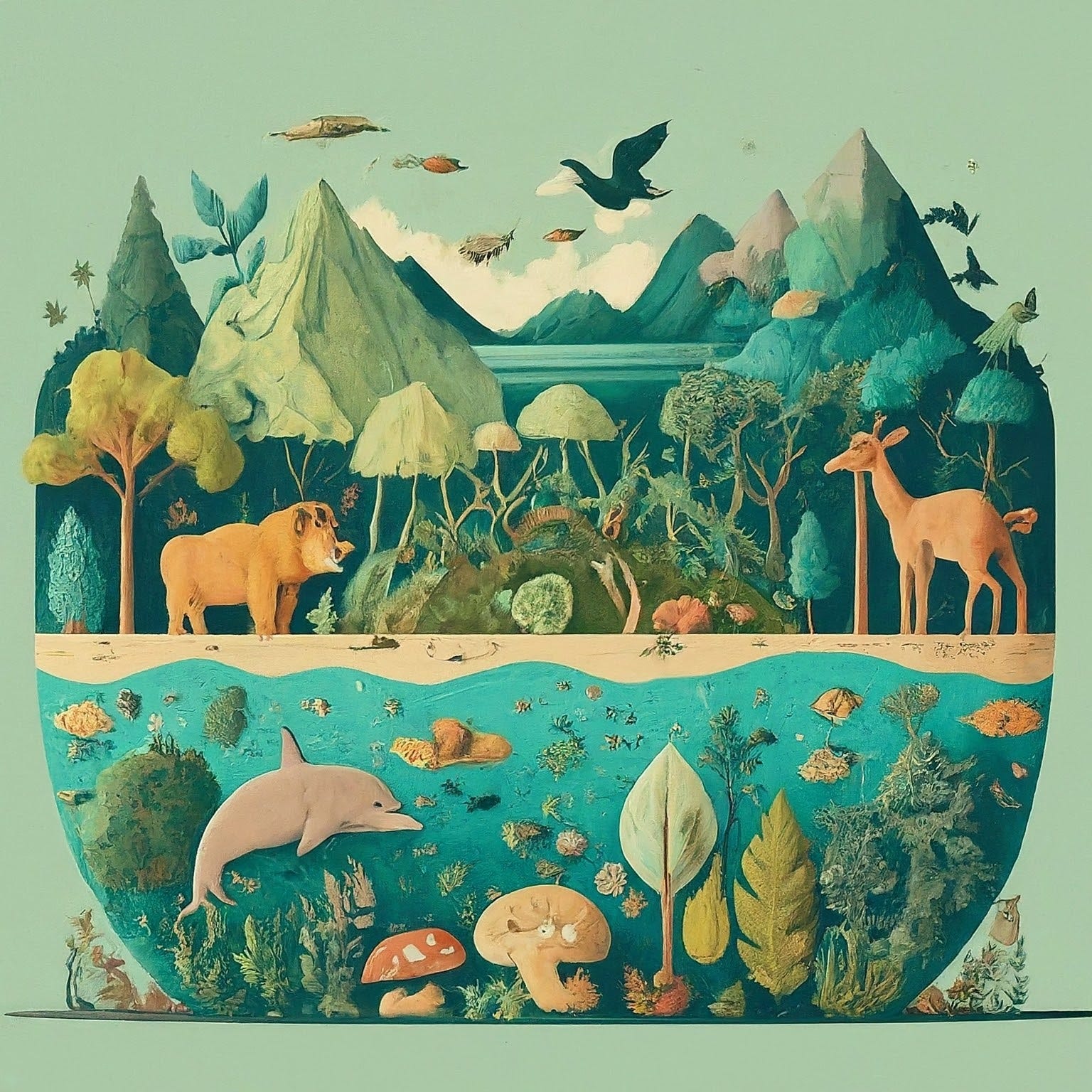
How does Human-Centered Design hurt us?
Oversight in the surrounding and interconnectedness: When we focus on making the human experience better it is often easy to ignore how the design is impacting all the other parts of the ecosystem that the human is a part of.
Creating new problems while solving existing problems: Because of insufficient research on impact and lack of intentionality, technological and innovative thinking constraints, we focus on the problem at hand often resulting in creating new problems for humans and others in an ecosystem.
Not focus on long-term impact: With time and resource constraints, we just go ahead with designs for human experiences that we know in the long term will negatively affect our surroundings.
Benefits of shifting focus from “human” to “humanity”
Timeless designs: When we take into account and let “universal/absolute truths”, “general/ contingent truths”, “particular/protocols” and “full particular” inform our design for the “ultimate particular”, we create timeless designs that are ethical, sustainable and socially responsible.
Sustainable design: Timeless design is sustainable design. When we create designs that at least start with discussing the negative impacts the human-centered design might have, we are taking a step towards creating a better experience not just for humans but also for non-human parts of our ecosystem.
Intentional innovation and not reactionary innovation: Creativity and innovation are unbounded when we make intentional changes instead of reactionary changes. While we might have technological constraints when we are taking a systemic approach to design, we take into account all the impact our design might have and it adds a dimension of intentionality in design.
Goals of humanity-centered design
Ethical, sustainable, and social accountability: With AI becoming a “thought partner”, "writing partner” and even technology becoming an extension of the human mind and body, there is a much-needed demand for making technology ethical, sustainable, and socially responsible. The idea of human-centered design is the first step towards it.
Thinking like a community of organisms, not people: We live in a community with complex interconnected relationships that are difficult to predict and design for. They are contextual. Instead of ignoring it, it is time we start untangling them to find a solution that is ideal for everyone in the community instead of just humans in the short term.
Inclusivity and Accessibility of all living and nonliving things: It is time, non-human parts of our ecosystem have a say in our design process. When we negatively impact non-human parts of our ecosystem with our human-centered design it comes back to us because, at the end of the day, all of us are interconnected.
Roadblocks in achieving humanity-centered design
Lack of Mindset/Awareness/ Intention/Motivation and Human Selfishness and Cultural Resistance: We are taught about sustainability and the ecosystem, how our designs impact the ecosystem, and why we should care for it very late in our career when we are already set in our ways of designing. When we start inculcating these values very early on in children, they will start approaching technology and innovation with an ethical and sustainable mindset.
Time & Resources: We often ignore the long-term negative impact of our design when we have time and resource constraints. It’s always easier to fix short-term problems.
Analysis Paralysis: The complex interconnectedness of all the components of our ecosystem makes it difficult for us to understand and find the root cause. To prevent analysis paralysis, we put a limit on how deep we dig while designing experiences.
So, what can we do?
The only way we can make the leaders of technology and business care for sustainability is when we as users start caring for sustainability. The user-centered business and technology leaders will start taking humanity-centered design seriously when the users they design for start caring for such products and demand them from them.
As Users
Thinking of ourselves as a community of living things
Intentionally educating ourselves about how we are having an impact on our community
Making brands and businesses accountable by standing against products that are unethical and unsustainable
Doing your smallest part in making the smallest change- as small as turning off light when no one is using the room
As Educators and Influencers
Amplify the voices of the relatively powerless and those who cannot speak human language
Educate and make your community of followers and students aware of existing issues why they should care and how they can care for it
Inspire them with your ideas that support humanity-centered design
As Designers and Developers
Question the norm, the first step is questioning why things are the way they are
Intentionally educating ourselves about how the product you are designing and developing is having an impact on our community
Identify and question unethical and unsustainable solutions, as an individual contributor in a big MNC, you might not have the power to make changes as the decision-making power is at the hands of the leaders however it’s still a win if you can just identify and question them, it’s the first step.
Become a leader with values. Even if you are merely a designer and developer now, in a few years, you will be one of the leaders. When you become a person with power, you can inspire and make changes as you have in-depth experience and knowledge of what is going wrong and how you or your company can fix it.
As Business and Technology Leaders
Educate and make yourself aware of existing issues why you should care and how you can care for it.
Identify the issues and do your homework on how you can use your power and skills to come up with a solution
Inspire and motivate your subordinates with humanity-centered values.
Humanity-centered design is a collective effort of all humans. This planet and all the human and nonhuman parts are our responsibility. When we start looking at the world as our home planet, our perspective, intention, and action will shift.
What are some of the ways you make positive changes that you think come under a humanity-centered approach that can inspire others?